The 2025 cough syrup tragedy, which claimed more than twenty three childrens lives, exposed serious gaps in Indias drug quality system. Despite new rules, advisories and updated testing methods, experts say these measures do not fully guarantee safety. Manufacturers warn of rising compliance costs, while labs say the impact on consumers will be small. The real issue is that unsafe medicines can still reach the market if rules are not enforced on the ground. This tragedy highlights why consumers must stay aware, question medicine quality and ask for test reports. Safe medicine should never depend on luck, and verified information is the only real protection until the system becomes stronger.
Category: Medicine’s Quality
In early October 2025, India was shaken by reports of twenty-three child deaths in Madhya Pradesh and Rajasthan linked to contaminated cough syrups. This tragedy, the country’s sixth recorded case of diethylene glycol (DEG) poisoning, exposed deep failures in medical prescription, pharmaceutical manufacturing, and regulatory oversight.
Investigations revealed that untested and unsafe medicines, negligence in quality checks, and weak enforcement of drug standards turned a preventable error into another national disaster. From doctors prescribing banned formulations to manufacturers bypassing safety testing and regulators denying contamination, every level of accountability failed.
Every strip of medicine tells two stories: who made it, and who sold it. The first decides its quality, the second its price. In India, that quality is meant to be safeguarded by Good Manufacturing Practices (GMP). But behind the official stamps and certificates lies a fractured system—opaque, inconsistent, and often compromised.
Are you popping supplements just because an influencer said so. You are not alone but you might be at risk. In this eye-opening blog, we explore how self-medication with supplements, without medical guidance, is becoming a silent health hazard in India. Backed by insights from doctors and real-life experiences, we break down the types of supplements, the risks of overuse, and compares weak Indian regulatory system with global standards. If you are looking for clarity (not hype) on what your body truly needs, this guide is a must-read.
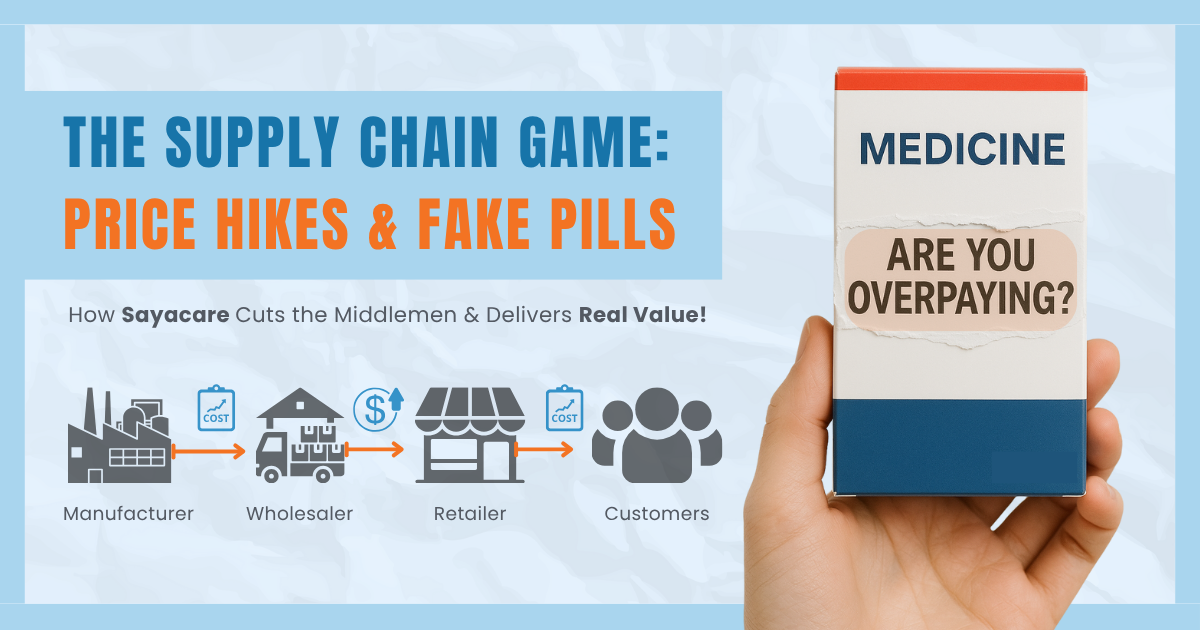
Life-saving drugs pass through multiple hands-suppliers, manufacturers, distributors, retailers-each adding their cut. The price shoots up, but that is not the worst part. Every extra layer in this chain increases the risk of fake or expired medicines slipping through.
With 20 percent of Indian medicines suspected to be counterfeit, the government mandated QR codes for 300 brands in 2022. But can they be easily bypassed.
Fake and spurious medicines are rapidly increasing in India, arising health concerns. Now the question is – should you trust the medicines you are buying.
Can Indian medicines really cure you. How much of Indian medicines are bad.
When Laxman was injured during the battle against Ravana, Lord Rama was informed that the Sanjeevani herb from the Himalayas could cure him. Lord Hanuman could not find the herb, so after fighting off Kalanemi, who had been sent by Ravana, he famously brought the whole mountain. Had Ravana changed his strategy and planted a poisonous/do-nothing look-alike herb in a visible place, then Hanuman and Laxman would be no different from the millions of Indians today who purchase/consume fake/substandard/adulterated medication.
Is your family health important to you? Imagine a scenario where your mother has been coughing for 3 to 4 days. You buy some medicine hoping it will cure the cough, but the next morning, they are unresponsive and cold to the touch. Before you reach the hospital, it is too late.