In India, roughly 20-25% of people have high blood pressure [1]. As soon as a person is diagnosed with high blood pressure, one question often comes to mind: Do I need to take medications for life? The short answer is no. In fact Studies suggest that diet and lifestyle changes can reduce the dependency on medications in patients with high blood pressure. [2,3]. However, when it comes to diet modification, people generally focus only on reducing sodium intake. But including potassium rich foods is equally important as reducing sodium salt intake.
In this blog, you will learn what high blood pressure is, its causes, and how low sodium intake along with potassium rich foods may help in managing blood pressure. Read to know more.
Table of Contents
What is High Blood Pressure/Hypertension?
High blood pressure is a condition in which blood is pushed against the walls of the arteries with very high pressure. When blood flows through the body with such high pressure, the risk of damage to organs can increase.
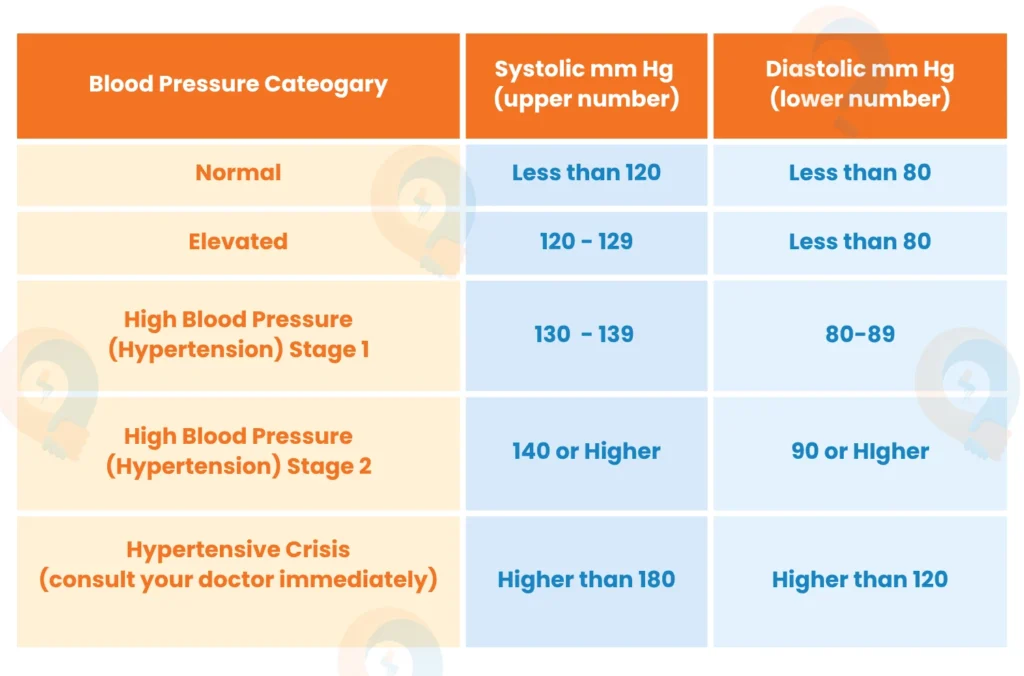
Below is a chart showing which blood pressure levels are considered normal, low, and high.
If you think blood pressure rises on its own, you are mistaken, lifestyle plays a significant role, along with the levels of sodium and potassium in our body. To understand their role in blood pressure, let us move to the next section……..
What is the Role of Sodium and Potassium in Blood Pressure?
Role of Sodium in BP- Sodium, which is commonly present in salt, tends to hold extra water in the body. This increases the amount of fluid in blood vessels and raises blood pressure.
Role of Potassium in BP– Potassium helps reduce the effects of sodium in the body by removing excess sodium and water. This may help lower blood pressure levels [4] .
Because of this, intake of low sodium foods is considered beneficial for people with high blood pressure. According to the WHO, adults are recommended to consume less than 2000 mg of sodium per day, which is equal to less than 5 g of salt or just under one teaspoon. For children aged 2 to 15 years, WHO recommends adjusting this amount according to their energy requirements.
The American Heart Association (AHA) also recommends that people with high blood pressure consume around 3500 mg to 5000 mg of potassium daily.
Best 4 High-Potassium Indian Food for High Blood Pressure
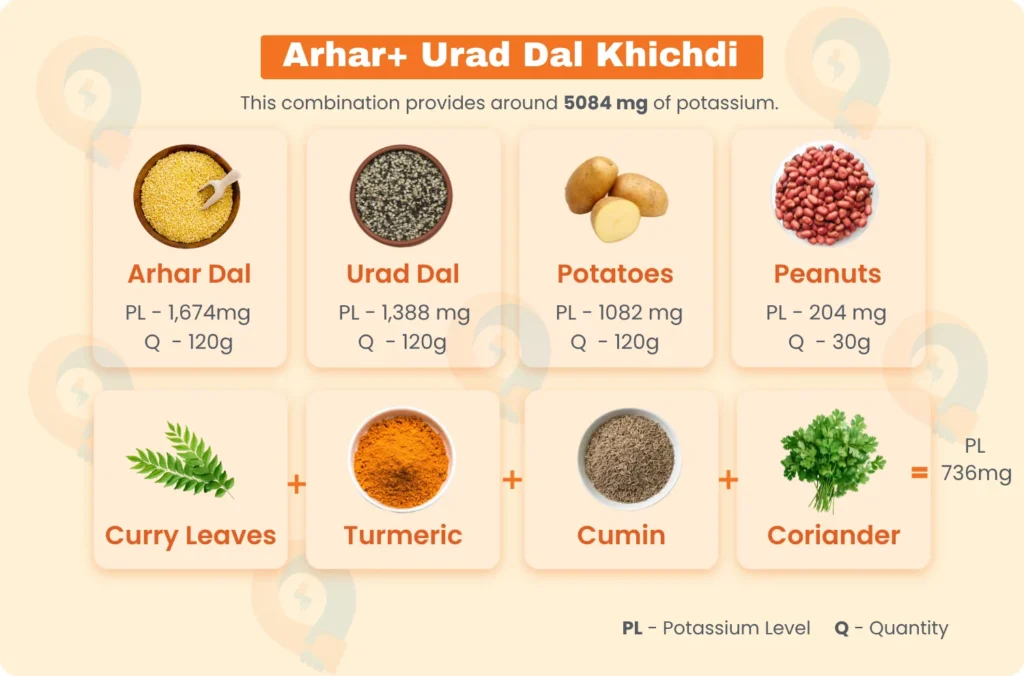
If you are looking for the best Indian food for high blood pressure with around 5000 mg of potassium for one person in a day, here is one option:
1. Arhar and Urad Dal
Wash and soak both arhar and urd dal for 30 minutes, then drain.
Heat oil in a pressure cooker, splutter jeera, then fry kadi patta, green chilli, and ginger for 1 minute.
Add haldi and dhaniya, stir for 20 seconds, then add the dals and aloo and coat with the spices.
Add 3- 3.5 cups water and salt, pressure cook for 3- 4 whistles, and let the pressure release naturally.
Open and mash lightly to a soft porridge, adjust water, and finish with lemon.
For the side, toss roasted peanuts with salt, red chilli, and lemon, serve separately, don’t mix in.
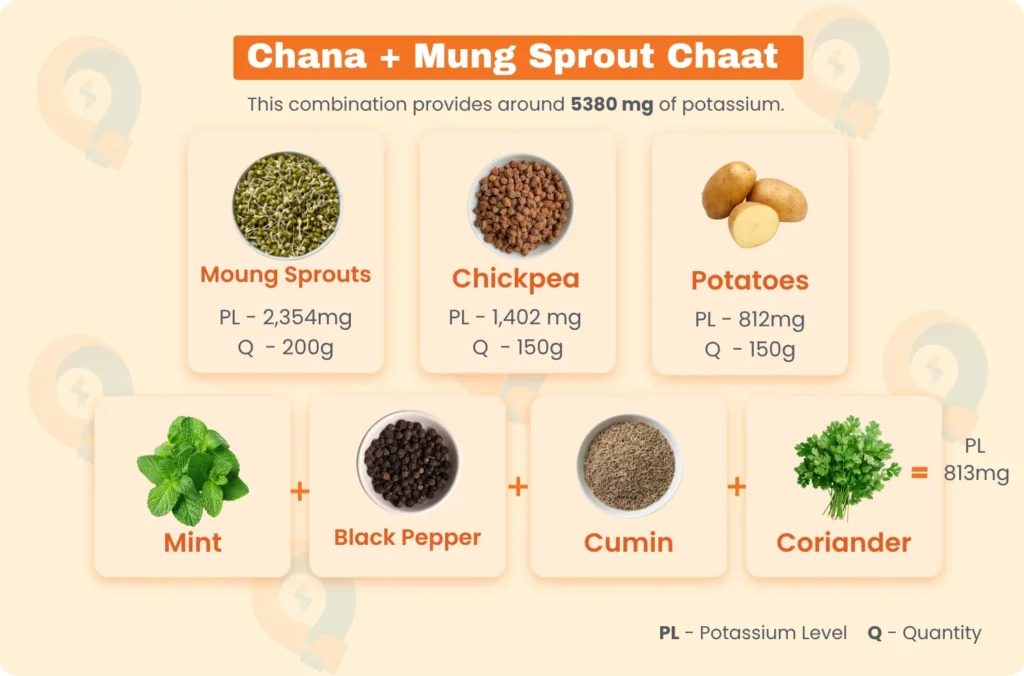
2. Chana and Mung Sprout Chaat
Start 36-48 hours ahead by soaking whole mung overnight, draining, wrapping in damp muslin, and keeping in a warm dark spot.
Rinse every 12 hours and use when tails are 1/2-1 cm long.
Soak kala chana overnight and pressure cook for 5-6 whistles until soft, then drain and cool.
Boil aloo with skin on and peel after cooling.
Blend pudina, dhaniya, green chilli, lemon, and jeera powder into a thick green chutney, keep it thick, don’t thin it out.
Lightly steam the sprouts for 3-4 minutes for easier digestion, or skip for raw crunch.
Combine sprouts, chana, and aloo, add the chutney, kali mirch, chaat masala, and salt, toss and serve immediately.
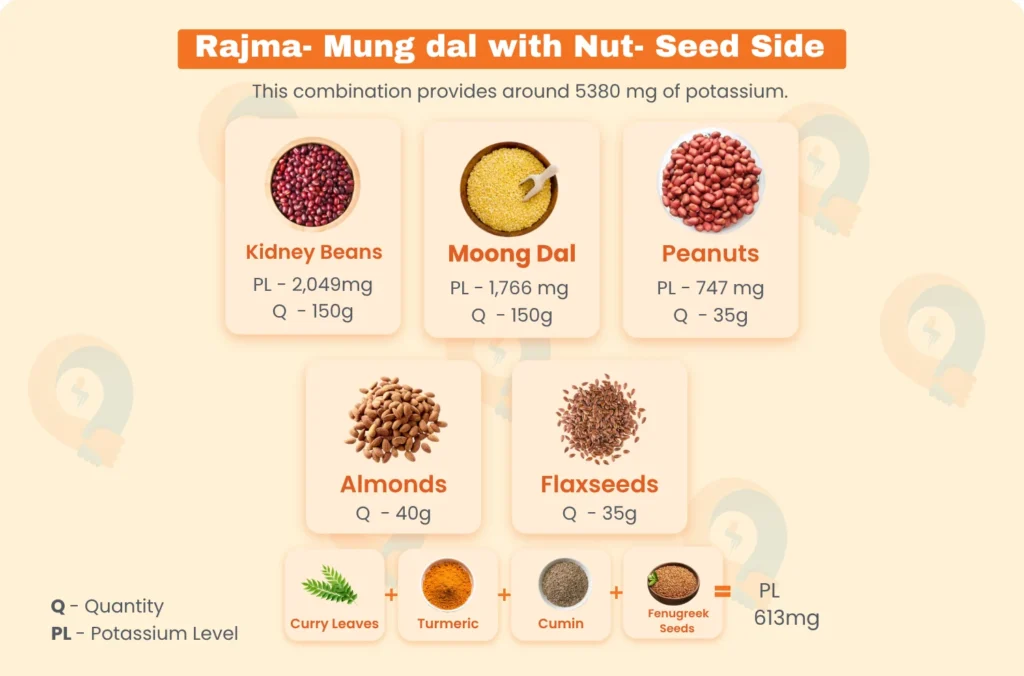
3. Rajma- Mung Dal with Nut- Seed Side
Soak rajma overnight and pressure cook rajma alone with a pinch of salt for 5-6 whistles until completely soft and set aside with its stock.
Cook mung dal separately for 2 whistles and set aside.
Heat oil in a pan, add methi dana first and let it sizzle for 10 seconds, then add jeera and kadi patta.
Add onion and saute until golden, about 10-12 minutes.
Add ginger-garlic paste and cook 2 minutes, then add tomatoes and cook until oil separates.
Add haldi and dhaniya, then add the boiled rajma with its stock and simmer for 8-10 minutes.
Stir in the mung dal and simmer together for 5 minutes, finishing with garam masala and salt.
For the trail mix, dry roast badam and peanuts together for 4-5 minutes and alsi separately for 2-3 minutes, it pops fast so watch it.
Cool, toss with salt and red chilli, and serve on the side.
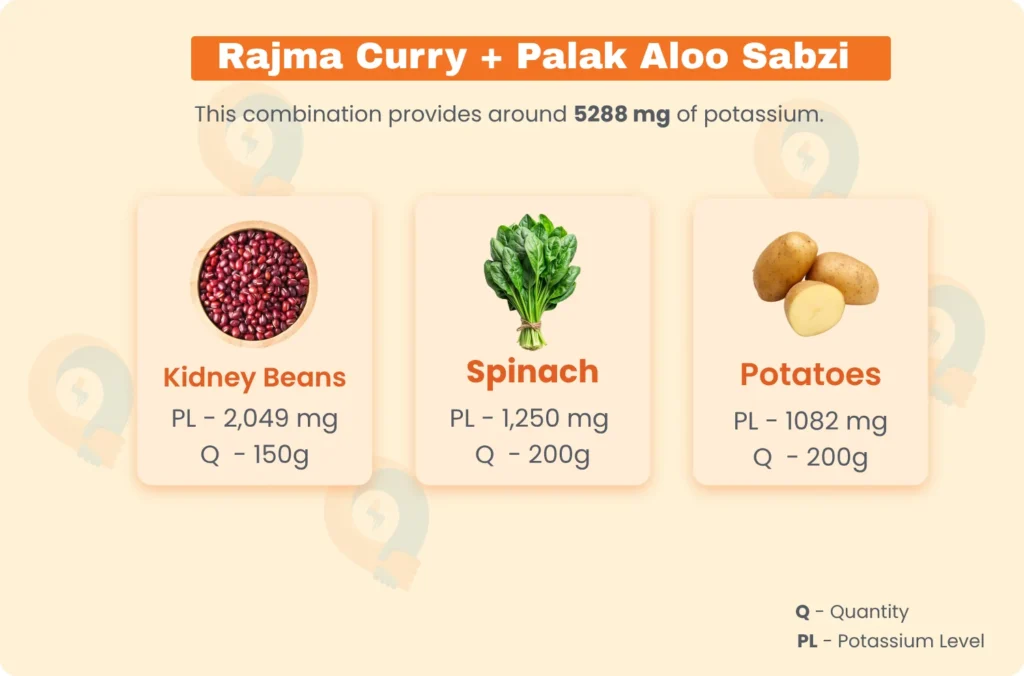
4. Rajma Curry and Palak Aloo Sabzi
Soak rajma overnight, then drain and pressure cook with fresh water, a pinch of salt, and a bay leaf for 4-5 whistles until completely soft.
Set aside with the cooking liquid. For the curry, heat oil in a deep pan, let jeera splutter, add finely chopped onions and saute on medium heat until golden brown, this takes 10-12 minutes, don’t rush it.
Add ginger-garlic paste and cook 2 minutes, then add tomatoes and cook until oil separates, about 8 minutes.
Add haldi, dhaniya powder, red chilli powder, and garam masala, stir well, then add the boiled rajma with its stock.
Mash a few beans lightly to thicken the gravy naturally and simmer on low for 10–15 minutes. Finish with amchur or lemon and garnish with fresh dhaniya.
For Sabzi
Wash palak well with 2-3 rinses, blanch in boiling water for 2 minutes, then transfer to cold water to preserve the colour.
Rough chop or blend lightly, keep some texture, don’t make a smooth paste.
Cube the aloo with skin on and parboil or microwave until just cooked.
Heat oil, add jeera and a pinch of hing, then add finely chopped onion and saute until translucent.
Add ginger-garlic paste and cook 1-2 minutes, then add green chilli and haldi and mix well.
Add the parboiled aloo, toss gently and let it pick up colour for 2-3 minutes.
Add the chopped palak, stir everything together, and cook on medium-low for 5-7 minutes uncovered, no lid, it keeps the colour bright.
Season with salt, a little dhaniya powder, and a pinch of garam masala at the end.
In the next section, there is a list of Indian food for high blood pressure and their potassium values.
List of Indian Foods and Their Potassium Content for High Blood Pressure
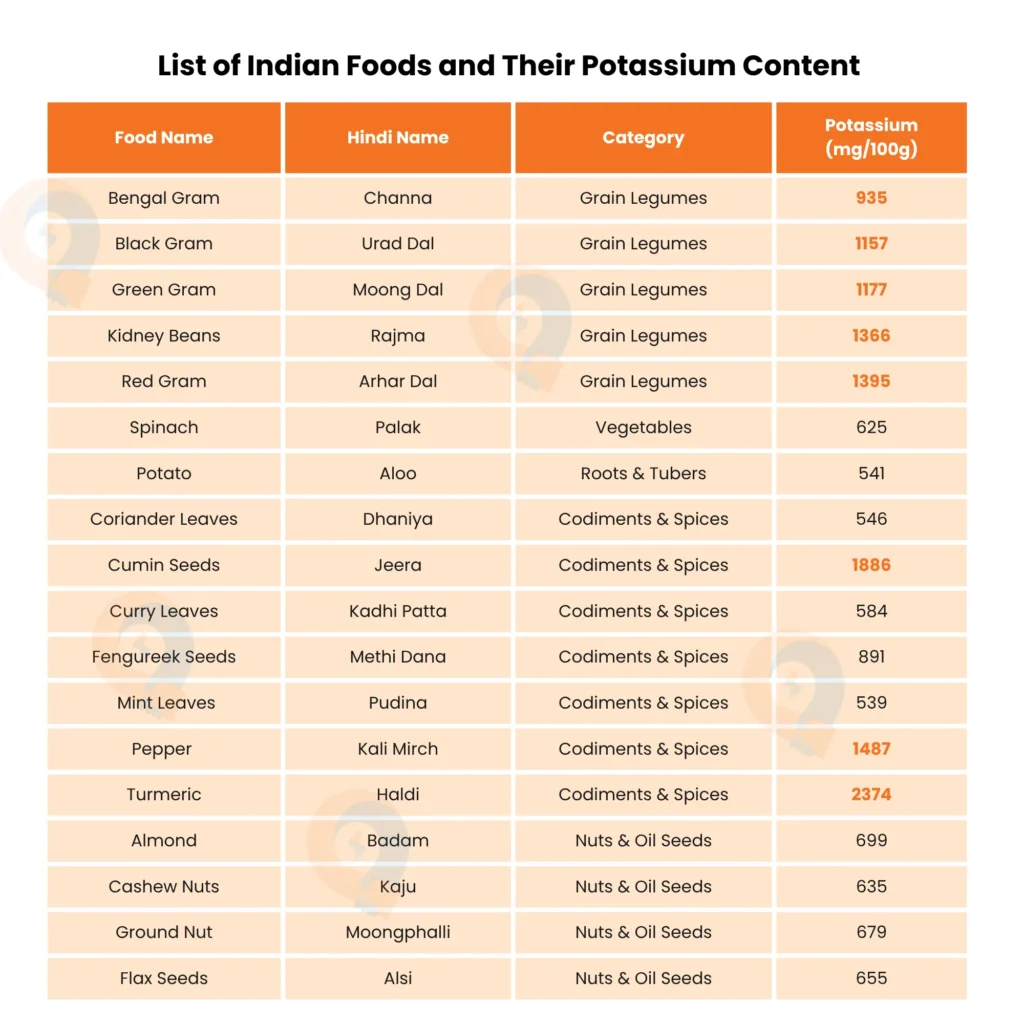
Below is a list of Indian food items along with their potassium content [5].
Indian foods that contain a high amount of potassium ranging from 1157 mg to 2374 mg include Urd dal (Black gram), Mung (Green gram), Rajma, Arhar dal (Red gram), Kali mirch (Pepper), Jeera (Cumin seeds), and Haldi (Turmeric). Potassium ranging from 500 mg to 1000 mg include Chana (Bengal gram), Palak (Spinach), Dhaniya patta (Coriander leaves), Kadi patta (Curry leaves), Methi dana (Fenugreek seeds), Badam (Almond), Kaju (Cashew nut), Moongphali (Groundnut), Alsi (Flax seeds), and Aloo (Potato).
Conclusion
High blood pressure can be managed effectively with the right lifestyle choices. Reducing sodium intake is the first step, but it works best when combined with a diet rich in potassium.
The good news is that potassium-rich foods are not hard to find. They are already a staple of Indian kitchens. Everyday ingredients like arhar dal, rajma, palak, jeera, and haldi can meaningfully support blood pressure management when eaten consistently as part of a balanced diet.
Small, sustainable changes in your daily routine can add up over time. If you have been diagnosed with high blood pressure, speak with your doctor before making significant dietary changes, as individual needs vary.
Managing blood pressure takes time and consistency, but with the right foods on your plate, you are already moving in the right direction.
Mahak Phartyal completed her bachelor's in pharmacy from Veer Madho Singh Bhandari Uttarakhand Technical University. She previously worked as a Medical Writer at Meril Life Sciences, where she wrote numerous scientific abstracts for conferences such as India Live 2024 and the European Society of Cardiology (ESC). During her college years, she developed a keen research interest and published an article titled “Preliminary Phytochemical Screening, Physicochemical and Fluorescence Analysis of Nyctanthes arbor-tristis and Syzygium cumini Leaves.”
Mahak Phartyal completed her bachelor’s in pharmacy from Veer Madho Singh Bhandari Uttarakhand Technical University. She previously worked as a Medical Writer at Meril Life Sciences, where she wrote numerous scientific abstracts for conferences such as India Live 2024 and the European Society of Cardiology (ESC). During her college years, she developed a keen research interest and published an article titled “Preliminary Phytochemical Screening, Physicochemical and Fluorescence Analysis of Nyctanthes arbor-tristis and Syzygium cumini Leaves.”