When you hear the term “generic medicine”, the first question that comes to mind is “Are generic medicines safe?”.
You are not alone. 43% shares the same concern. [1]
But perhaps the real question we should be asking, “Is the medicine I am consuming is safe and effective, regardless of the same on the box?”
After all, if you question the quality of the food you eat every day, why wouldn’t you demand the same transparency with medication? In this blog, we’ll explain why a doctor’s prescription or a famous branded name isn’t 100% guarantee of quality. Instead of getting lost in the maze of “generic vs. branded” labels or relying on anecdotal reviews, you’ll learn why the only real answer lies in a test report.
Table of Contents
What are Generic and Branded Medicines?
Branded Medicines
The Layman Definition: Those medicines that are prescribed to you by a doctor using company given brand name instead of their actual salt name
The Technical Definition: Branded Medicines are patented medicines that can only be manufactured and sold by company that discovered them for a limited time.
Generic Medicines
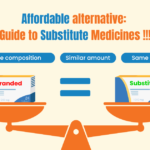
The Layman Definition: Medicines that can substitute your doctor prescribed medicines while having the same active ingredient.
The Technical Definition: When the manufacturing monopoly of a medicine is no longer limited to the parent company that discovered, developed, and marketed it, and other companies are allowed to manufacture it.
In the Indian context, the main difference between branded and generic medicine is marketing. The same medicine sold as a branded product can also be sold as generic.
Are Generic Medicines Safe?
Yes, generic medicines are equally safe as their branded counterpart. They go through same testing procedures and standards to ensure the same effectiveness, quality and safety.
If we talk about medicine marketing, you may have noticed when your doctor prescribed medicines to you. Most medicines in India are generic medicines, but when doctors prescribe expensive medicines, they are often branded version.
Medical representatives (MRs) visit doctors to promote their company’s medicines. Some brands also use celebrities as brand ambassadors. For example, Amitabh Bachchan has promoted Mankind.
The cost of this marketing is ultimately recovered from consumers.
For example, doctors often prescribe Dolo-650 which cost Rs. 28 instead of simply writing paracetamol 650 of Rs. 13 (SayaCare Price).
Most patients recognize the name Dolo because it has become a trusted brand through repeated prescriptions and marketing.
We’ve seen this firsthand at SayaCare: a manufacturer changed the name of a drug we were supplying simply to accommodate another company marketing the exact same drug under a different label. Same batch, same machine, different boxes.
Medicines should not be judged based on whether they are branded or generic because a generic medicine manufactured in a plant can be produced alongside branded medicines in the same facility.
The best way for Indians to judge the quality of a medicine is through proper test reports, as this can solve many concerns related to medicine quality.
Why Generic vs Branded is a false Dichotomy
Explanation of generic and branded medicines are often focus on few key points, which are:
Contain the same active ingredient
Have the same strength and dosage form
Are approved for the same indication
Provides the same efficacy and safety profile through bioequivalence standards
Scientifically, these statements are correct. But they do not fully address what most Indians actually mean when they talk about “generic medicines”.
In India, people usually think of generic medicines as a substitute medicine given in place of a doctor prescribed brand. Under this understanding, the real issue is not whether the medicine is generic or branded. The real issue is whether the medicine itself is good quality.
Two medicines from different manufacturers can both claim to contain the same active ingredient, but that alone does not guarantee that patients will always receive the exact same quality.
For example:
Every month, regulators identify batches of substandard or failed medicines in the market
Manufacturing quality can vary between companies and facilities
Minor variations in formulation and excipients can exist
Different states may enforce regulations differently
Bioequivalence is not mandated by Indian Regulatory system
Generic companies across India often want consumers to believe that all generic medicines are just as good as branded medicines. However, this misses the bigger issue. The debate is not about branded vs generic. The real question is: Are medicines actually good?
This takes us to the next part………
Issues With Medicine Quality in India
People in India often prefer branded medicines because they believe they offer “Quality”.
However, a 2025 survey conducted by the Authentication Solution Providers Association (ASPA) across 9 major Indian cities found that 28% of medicines were counterfeit, while 63% of local retail outlets sold counterfeit medicines. The survey also reported that around 53% of medicines supplied through online pharmacies were fake. [2]
The study was conducted on medicines in general, not specifically on generic or branded medicines. This shows that paying more for a medicine does not always guarantee quality.
In such a situation, a medicine testing and delivery model like SayaCare becomes important, where medicines are tested and provided with batch-wise test reports.
Most medicine providers ask you to trust the brand name on the box. We think that’s not enough.
At SayaCare, every batch of medicine procured from manufacturers is sent to a government-approved laboratory for testing.
When you order from us, you don’t just receive medicine. You receive a batch-wise test report alongside it. This means you can verify exactly what you’re taking: the active ingredients, purity levels, and whether the batch passed quality standards.
We also source directly from manufacturers, cutting out the long chain of distributors and middlemen that inflate prices. This is also how counterfeiting enters the supply chain. Fewer hands means less risk. This is how we offer medicines at up to 80% lower prices without cutting corners on quality.
In a market where 1 in 4 medicines may be counterfeit, we believe transparency is a baseline.
Whether a medicine is branded or generic, its quality cannot be fully trusted unless a proper test report is provided. With reports showing that around 28% of medicines in the Indian market are counterfeit, consumers need to be careful about what they consume
SayaCare addresses this by providing batch-wise test reports with every medicine. We also offer medicines at up to 80% lower prices by sourcing directly from manufacturers and maintaining a smaller supply chain.
FAQ’s
1. Are generic medicines safe?
Are generic medicines safe? This is a common doubt among Indians. However, generic medicines are equally as safe as branded medicines, and people should not judge them based on their names alone. Individuals should check a medicine’s test report, especially when 28% of medicines in India are reported to be counterfeit. Currently, SayaCare provides medicine test reports with every medicine batch.
2. Is generic medicine safe for heart patients?
Yes, generic versions of heart medication are safe as they contain the exact same salt (Active pharmaceutical ingredient) as branded ones, meaning they manage all the heart disease (like blood pressure, cholesterol, heart failure etc) with identical precision. Since heart conditions require consistent, long-term treatment, choosing quality-tested generics allows you to maintain your daily health routine safely and affordably.
3. Is generic medicine safe for Diabetic patients?
Yes, generic diabetes medications are considered safe and chemically identical to branded options. Active ingredients like Metformin or Glimepiride work in the exact same way to control blood glucose levels and manage insulin sensitivity. Transitioning to generics automatically raises doubt about “Are generic medicines safe”, but switching to generic medicines does not mean compromising on your blood sugar level, it simply eliminates the heavy retail markup, making everyday diabetes management highly affordable and stress-free.
Mahak Phartyal completed her bachelor's in pharmacy from Veer Madho Singh Bhandari Uttarakhand Technical University. She previously worked as a Medical Writer at Meril Life Sciences, where she wrote numerous scientific abstracts for conferences such as India Live 2024 and the European Society of Cardiology (ESC). During her college years, she developed a keen research interest and published an article titled “Preliminary Phytochemical Screening, Physicochemical and Fluorescence Analysis of Nyctanthes arbor-tristis and Syzygium cumini Leaves.”
Mahak Phartyal completed her bachelor’s in pharmacy from Veer Madho Singh Bhandari Uttarakhand Technical University. She previously worked as a Medical Writer at Meril Life Sciences, where she wrote numerous scientific abstracts for conferences such as India Live 2024 and the European Society of Cardiology (ESC). During her college years, she developed a keen research interest and published an article titled “Preliminary Phytochemical Screening, Physicochemical and Fluorescence Analysis of Nyctanthes arbor-tristis and Syzygium cumini Leaves.”